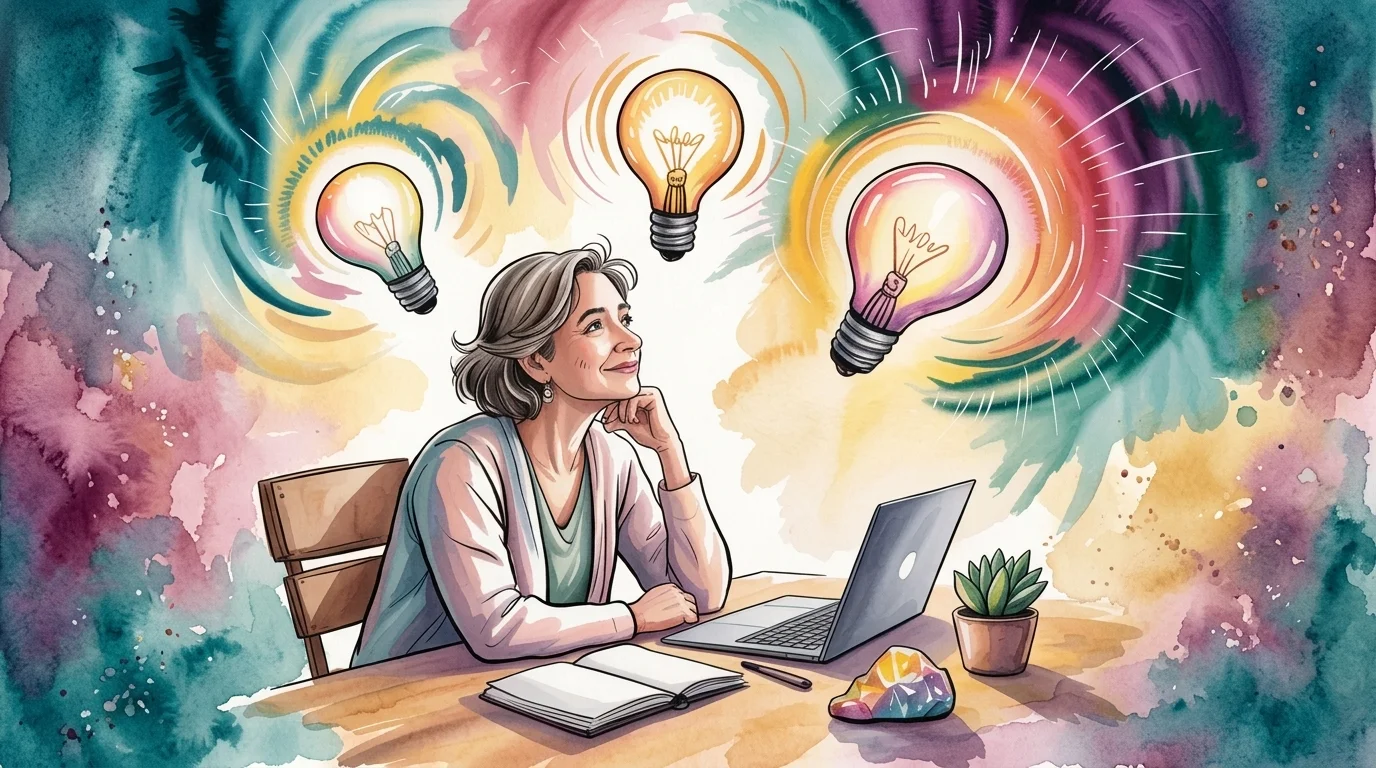
Learning how to turn ideas into a completed project sounds simple at first — until you’re staring at too many possibilities and no clear place to start.
Having ideas is rarely the problem. The hard part is moving from a spark in your head to something you can actually begin.
If you're a creative woman with notebooks full of concepts, half-started plans, and too many directions to choose from, it probably means you have a lifetime of experience, inspiration, and ideas waiting for a place to land.
Why your ideas feel scattered and never turn into a project
Creative minds tend to see possibilities everywhere. That's great, and yet it can feel inspiring one day and exhausting the next.
You may have five good ideas, but no time or motivation to do anything with them today. So the ideas stay in your head, where they still feel alive and full of possibility. Meanwhile, nothing gets brought to life.
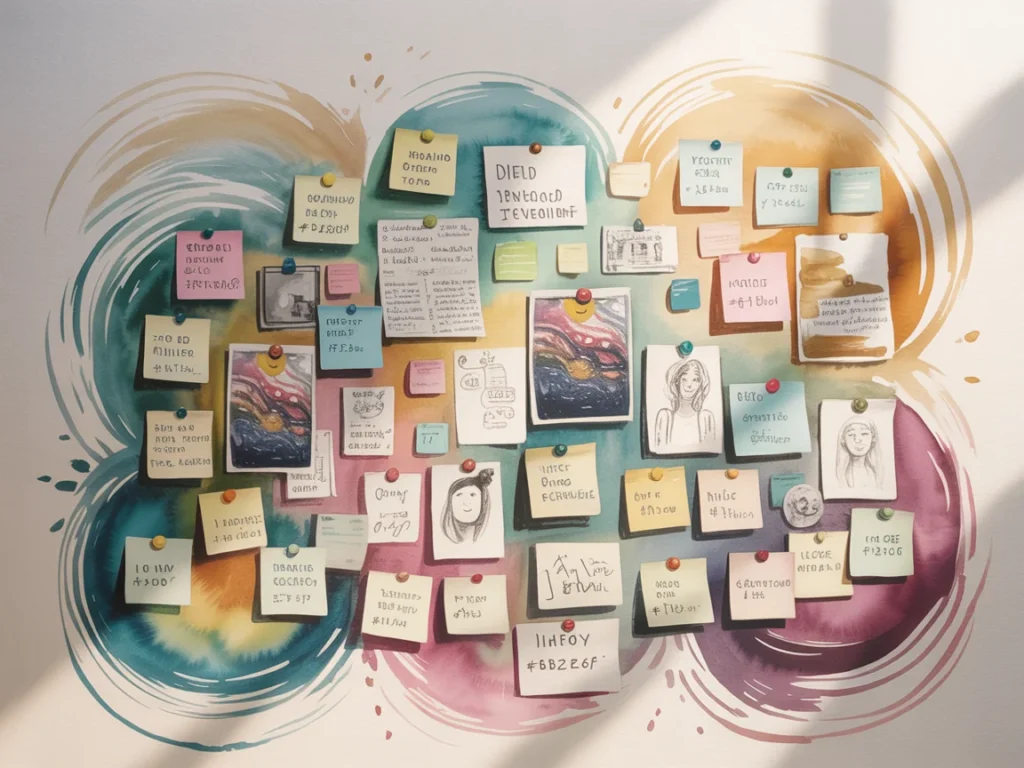
When you already have plenty of ideas, more inspiration won't help much. More likely, it will just cause your head to spin.
What helps is picking one idea and giving it space to settle. That doesn't mean it has to be your best idea. It only needs enough life in it to begin. Trust me, if you wait for your best idea you will never even start. Remember, this isn't your life's work. It is simply a place to start.
Why waiting for perfect clarity keeps projects stuck
Many people assume clarity comes first. In practice, it usually comes after you start.
When you try to figure out the whole project before taking one step, you create pressure that stops momentum. Taking a step and even making a mistake teaches you more than a polished plan sitting in your notes app or journal.
What keeps a promising idea from becoming finished work
Most unfinished projects don't fail because the idea was weak. They stall because the idea never got enough structure.
When everything feels possible, it becomes harder to choose
A loose idea can go anywhere, so every version seems possible. That sounds freeing, but it often leads to second-guessing.
If everything fits, nothing stands out. You keep circling instead of choosing.
No constraints make the project too open-ended
Limits help more than most creative people expect. A clear time frame, one audience, or one format cuts through fog. Don't try to do it all. Just do one and follow it all the way to the finish line.
You can still be imaginative inside a frame. In fact, limits often make your work easier to shape and finish.
Inconsistent pieces make the project feel disconnected
This matters with visual work, written work, and mixed-format projects. One strong image, one good title, or one useful page is not enough if the parts don't belong together.
A project feels stronger when the pieces share a tone, theme, or purpose. Without that thread, even good work can feel random.
A project starts to feel possible when it has shape, not when it has perfection.
The shift: A Simple Way to Turn Ideas Into a Project
A helpful change is this: stop asking, “What should I make?” Ask, “What could this become?”
That small shift lowers the stakes. You are no longer trying to predict the perfect final result. You are choosing a path you can test.
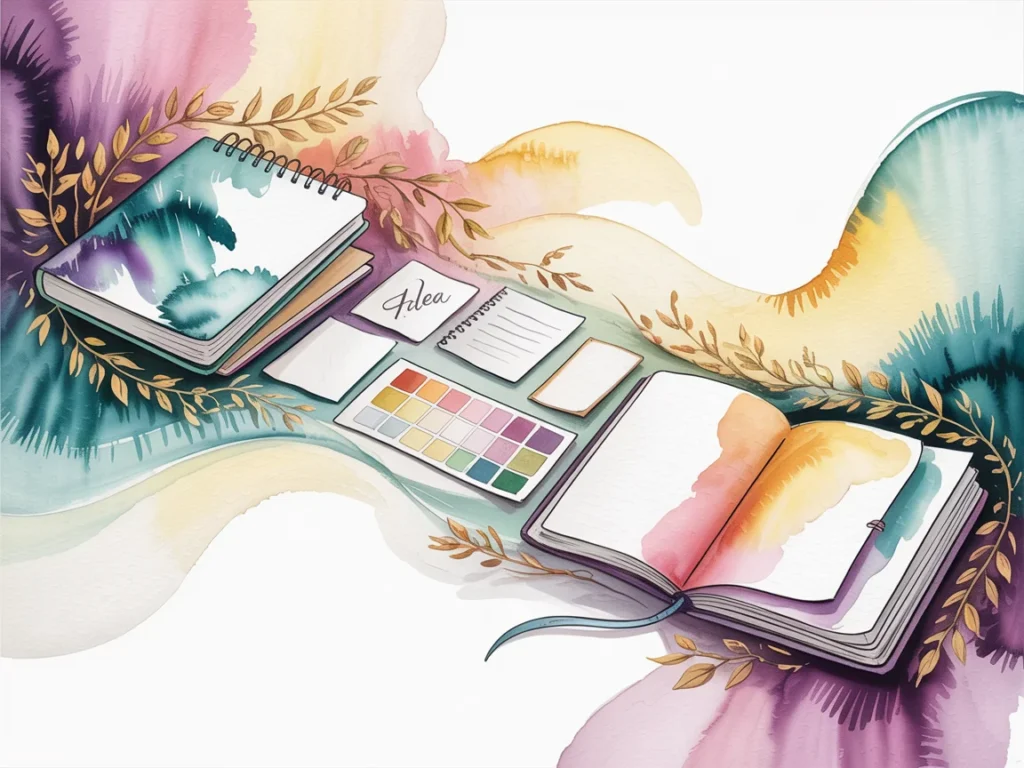
A broad idea needs a format before it can move. “I want to make something about calm mornings” is still wide open. It becomes workable when you turn it into a short guide, a card set, a photo series, or a printable journal page to help someone intentionally experience a calm morning.
The idea stays the same at its core. The format gives it edges.
Use one sentence to define what you want to create
One sentence can show you whether an idea has enough shape yet. Try, “I want to create something about…” or “I'd love to make something for…”
If the sentence still feels fuzzy, narrow it. If it feels clear, you have a direction to build from.
How to turn ideas into a project you can actually start
You don't need a complex method. You need a calm way to move from idea to action.
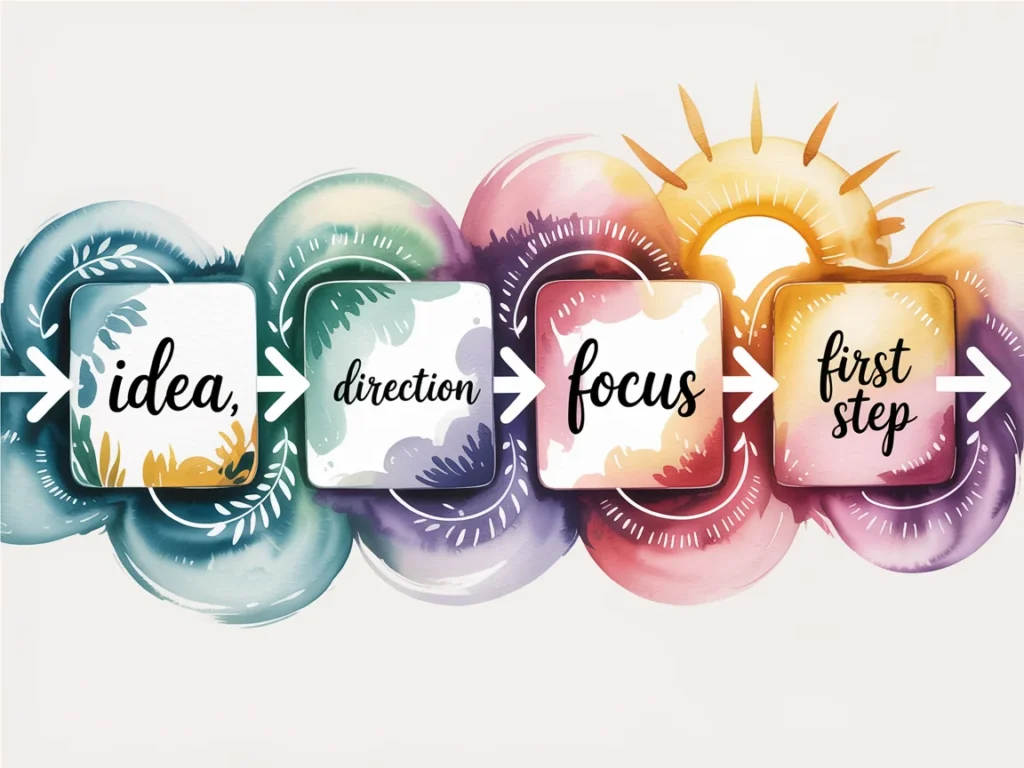
Choose the idea that has energy today. That matters more than choosing the idea that sounds impressive. There will be time for impressive later.
The right starting idea often feels interesting and doable at the same time. It will give you energy. Follow that pull.
Define the purpose before you define the details
Ask why this project should exist. Your answer may be personal, practical, or creative.
Maybe you want to express something, help someone, or turn a loose theme into a finished piece. Purpose helps you make choices along the way faster because you know what the project is trying to do.
Shrink the project until it feels possible
Most people start too big. (Trust me on this one!) Then the weight of the project scares them off.
Make the first version smaller than your ambition wants. A 30-card collection can begin as 3 cards. A full course can begin as one outline. A product line can begin as one set. This may sound obvious, but a 30-card collection always starts with the first card. So do that. And then the next. And so on.
Choose the first visible step and make it simple
Your first step should be so clear that you can do it without debate. That may be opening a notebook and sketching three ideas. It may be writing a rough outline, collecting image references, naming the project, or creating one draft.
A good first step is visible and small. You should be able to point to it and say, “I did that.”
Why consistency matters more than trying to be brilliant
This matters even more if you create visual work such as AI images, cards, printables, or themed collections.
This is also why AI-generated image projects often feel disjointed. If every image uses a different mood, style, or visual direction, the final project starts to feel scattered instead of cohesive.
Even beautiful images can feel “off” together if they were created without a clear direction from the beginning.
If this sounds familiar to you, you might enjoy reading:
Why Your AI Images Don't Match (and How to Fix Them)
A cohesive project feels calmer to build
When the style, mood, or message repeats, your brain has less to solve each time. You stop reinventing the project every day.
That steady thread also helps the finished work feel intentional. It gives the project a sense of belonging together.
Small rules can keep your project on track
Set a few guardrails early. Use one theme, one audience, one visual mood, or one kind of message.
Simple rules reduce decision fatigue. They also help you finish, because you stop chasing every new idea that appears mid-project. If a new idea comes along while you are working (and they will!) simply write it on your “possible projects” list so you remember and keep moving forward.
A simple tool can help you find your first direction and turn your ideas into a project
I created a simple tool called the Turn Your Idea Into Something assistant to help with this process.
Instead of staring at a vague idea and trying to figure everything out at once, the tool helps you explore a few possible directions your idea could take—along with a simple place to begin.
It’s designed to help you move from “I have an idea…” to “Okay, I can actually start here.”
If you’re working with AI images, prompts, or visual project ideas, having a little structure can help tremendously.
I often start by choosing a simple direction, then use my free AI Image Prompt Generator to help shape the visual side of the project. Once I have a clearer idea, I’ll experiment in tools like Ideogram, MidJourney, or Artistly, then bring everything together in Canva as the project starts taking shape.
The goal isn’t perfection right away. It’s creating enough clarity and momentum to actually begin.
✨Try the “Turn Your Idea Into Something” tool
What a good starter tool should do for you
A useful tool should reduce noise. It should help you sort options, see a few paths, and move past the blank-page feeling.
The goal is clarity, not automation. You still make the choices.
When to use a tool instead of forcing the answer alone
Sometimes an idea is too wide to shape on your own in one sitting. That's normal.
Sometimes it helps to see different kinds of creative directions before deciding what fits you best. Here are a variety of digital project ideas you can adapt and create using your AI images: 10 Simple Projects You Can Create with AI Images
How to turn ideas into a project without overthinking every step
You do not need to have everything figured out before you begin. Most meaningful projects become clearer as you work on them.
Pick one idea. Make it smaller. Take one visible step.
Sometimes that’s enough to change everything.
“A project begins to take life the moment an idea is given a direction.”
Here's to making magic,
Terre 💜
Beautiful Creative You
✨ Want help turning your idea into something you'll actually create?
If you have an idea but aren’t sure what to do with it, you’re not alone.
I created a simple, free tool that helps you explore a few possible creative directions—so you can stop overthinking, choose a starting point, and begin with more clarity.
✨ Try the Free Idea Tool →
TIP: Try starting with something simple like:
“I want to create something about…”
or
“I’d love to make something for…”
💜 Let’s stay connected!
I’d love to cheer you on and share even more creative sparks with you:
- Join the conversation in my free Facebook group: Beautiful Creative You Community
- Follow me on Facebook
- Follow along on Instagram
- Find fresh ideas on Pinterest
🌟 Come say hi — I’d love to see what you’re creating.
By the way, some links in this post may be affiliate links, which means I may earn a small commission if you choose to purchase through them (at no extra cost to you).